Book
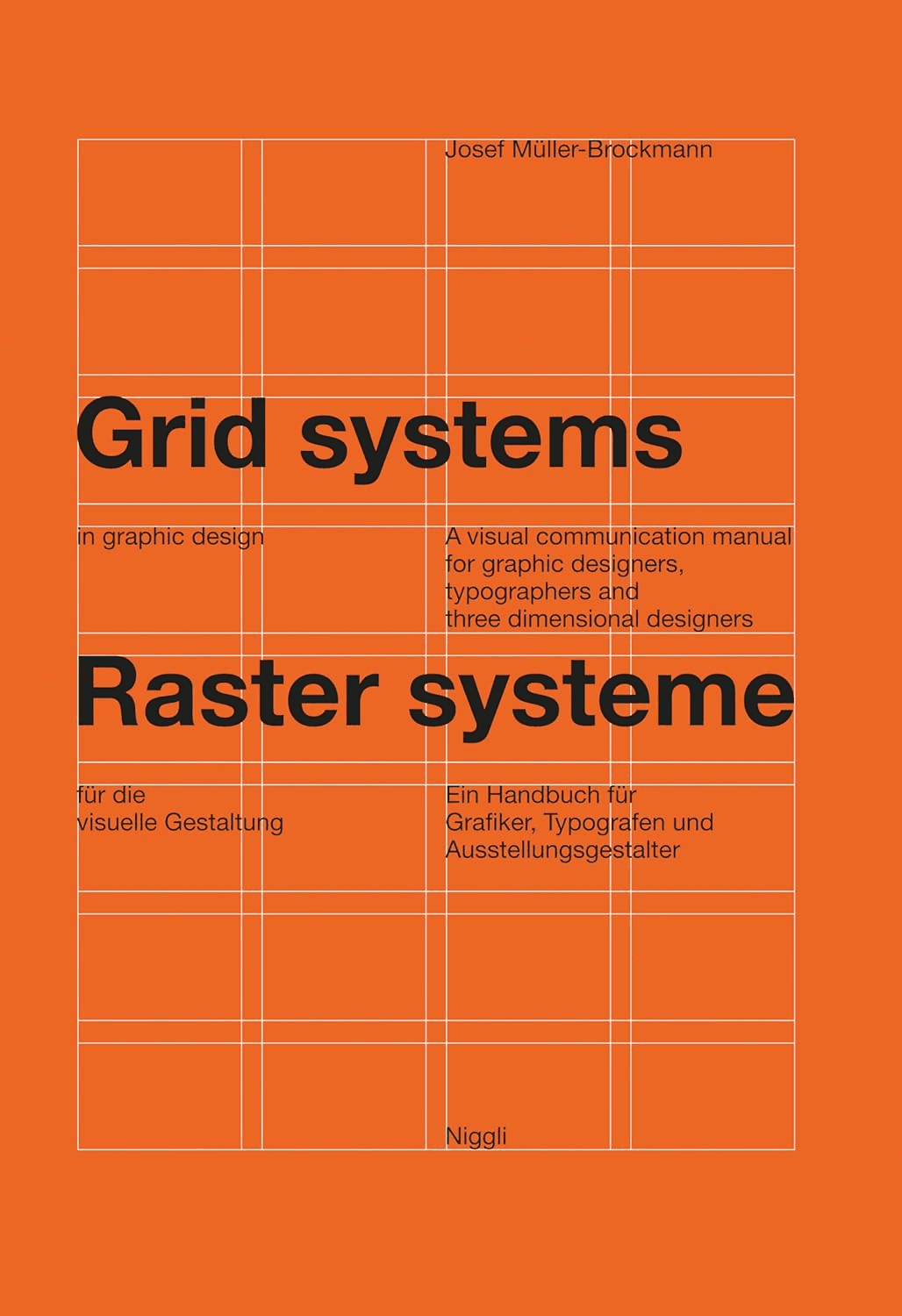
Grid systems in graphic design
A definitive manual by Josef Müller-Brockmann that provides a comprehensive guide to grid-based design, explaining how to organize space, text, and images with mathematical precision and objective logic.
About
Grid Systems in Graphic Design by Josef Müller-Brockmann, first published in 1961. A manual for organizing space, typography, and imagery with mathematical precision — and one of the most quietly radical books ever written about design.
Müller-Brockmann was a central figure of the Swiss International Style. This book is both his method and his argument: that the grid isn't a restriction, it's a foundation.
What I Find Inspiring About This
Most designers encounter grids as rules. This book reframes them as decisions with consequences — and that shift changes everything about how you work.
Müller-Brockmann's argument isn't that you must use a grid. It's that if you understand what a grid does — how it creates rhythm, establishes hierarchy, gives the eye somewhere to rest and somewhere to move — you become capable of making layouts that feel inevitable rather than arbitrary. The structure disappears into the result.
What keeps this book relevant decades after publication is that the problem it solves hasn't changed. Every Framer layout, every section, every spacing decision is still the same question: how do you organize space so that it serves the content without announcing itself? The tools are different. The answer is the same.
I come back to this one whenever a layout starts to feel like it's fighting me. The grid doesn't solve the problem — but it tells you exactly where the problem is.