Postage Stamp
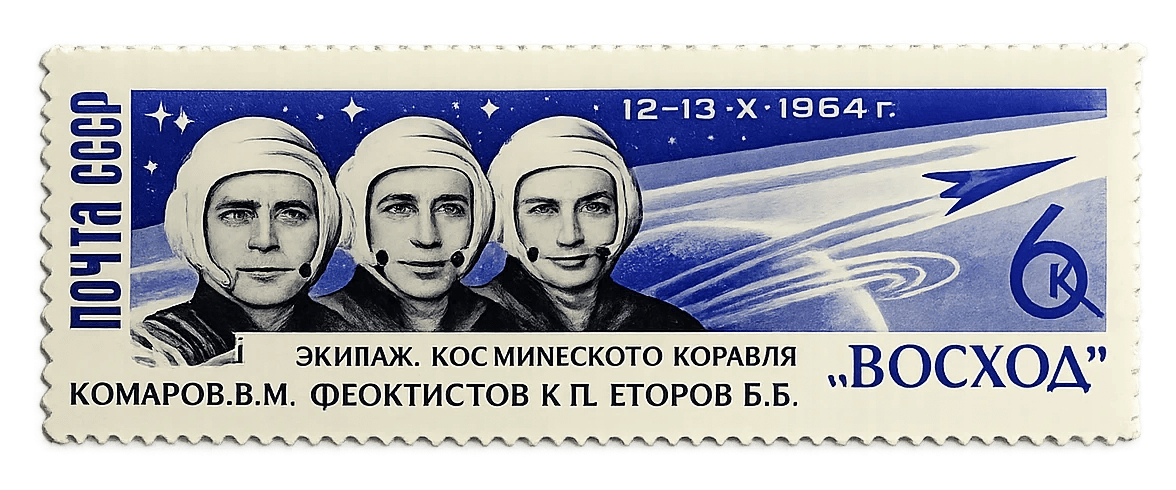
Soviet Voskhod 1 crew stamp
A horizontal 1964 USSR postage stamp commemorating the first multi-person space mission, featuring portraits of the three cosmonauts and their spacecraft in orbit.
About
A horizontal 1964 USSR stamp commemorating Voskhod 1 — the first multi-person spaceflight, launched October 12, 1964. Three cosmonaut portraits across the frame: Vladimir Komarov (commander), Konstantin Feoktistov (engineer), Boris Yegorov (physician). The spacecraft orbits in the background.
What the stamp doesn't show: the three men had no spacesuits, no ejection seats, no launch escape system. The capsule had been designed for one person. They dieted to fit inside it. A small air leak would have killed them all. The Soviet space program's own leadership privately called the mission "a circus." NASA called it a significant space accomplishment. Both were right.
While they were in orbit, Khrushchev was deposed. He spoke with them by radio from his dacha in Crimea, was summoned back to Moscow, and was removed from power. When the crew landed the next day, Brezhnev greeted them — his first public appearance as the new Soviet leader.
What I Find Inspiring About This
The horizontal format is the right call for three subjects. Stack them vertically and you get a hierarchy. Arrange them side by side and you get equality — a crew, not a ranking. For a mission that was fundamentally about achieving a first through collective effort, the format makes the argument before you read a word.
Three portrait stamps present a specific design problem: how do you give each face enough space to read while keeping the composition unified? The spacecraft in orbit behind them solves it — a shared backdrop that ties the portraits together without making any single face the subject. The mission is the subject. The people are how you know it was real.
The stamp was printed to declare a triumph. The full story makes it something stranger: a monument to a gamble that happened to work, issued by a country that was already changing governments by the time the film was developed.