Book

Stop Stealing Sheep & Find Out How Type Works

A classic guide by Erik Spiekermann that explores the history, theory, and practice of typography, using relatable metaphors and clear visual examples to show how type influences the way we read and feel.
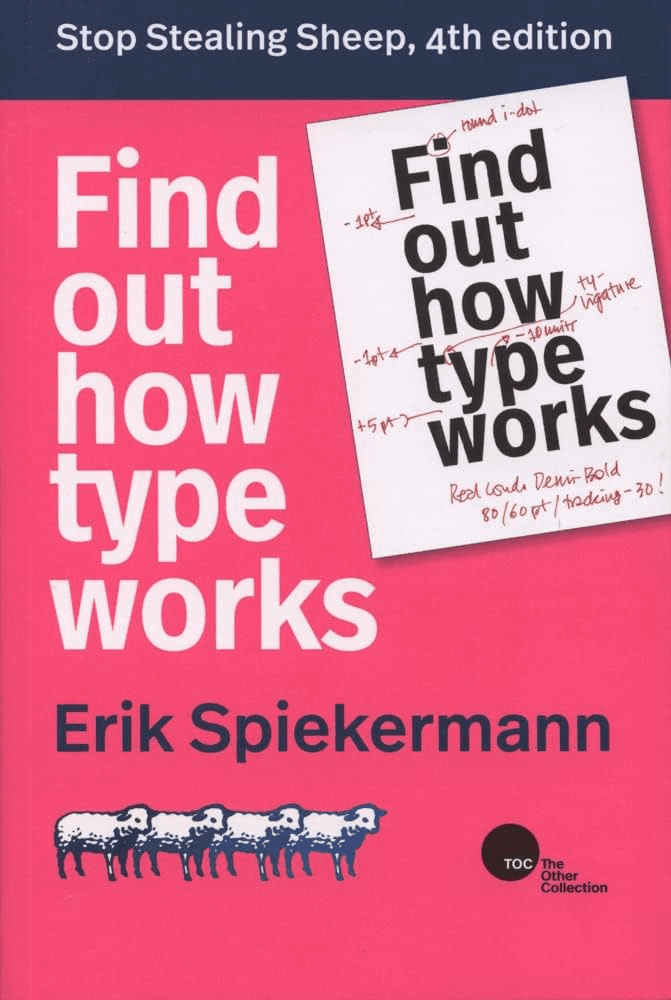
A classic guide by Erik Spiekermann that explores the history, theory, and practice of typography, using relatable metaphors and clear visual examples to show how type influences the way we read and feel.

About

The title alone is a provocation. Erik Spiekermann borrowed it from a 16th-century typographer's warning — that bad spacing between letters could turn an "f" into a "t," turning "shift" into something quite different. The point: type is never neutral. Every choice you make is either working for the reader or against them.

First published in 1993, Stop Stealing Sheep was one of the first books to explain typography not as a craft for specialists but as a system anyone who communicates visually needs to understand. Spiekermann — the German designer behind typefaces like FF Meta and the visual identity of the Berlin transit system — had the credibility to make that argument stick.

It's been updated twice since. Still in print. Still assigned.

What I Find Inspiring About This

What I keep coming back to is how Spiekermann treats type as voice. Not decoration — voice. The idea that a typeface choice carries as much meaning as the words themselves is obvious once you've heard it, but this book is where I really understood it. The visual examples are sharp: same words, different fonts, completely different feeling.

That thinking is directly useful in web design. Every time I'm building a Framer template and choosing a type scale or pairing a serif with a grotesque, this is the framework running in the background. Typographic hierarchy isn't about aesthetics first — it's about guiding attention. Spiekermann just explains it better than anyone else I've read.

Short book. Dense with the right things.
Continue exploring

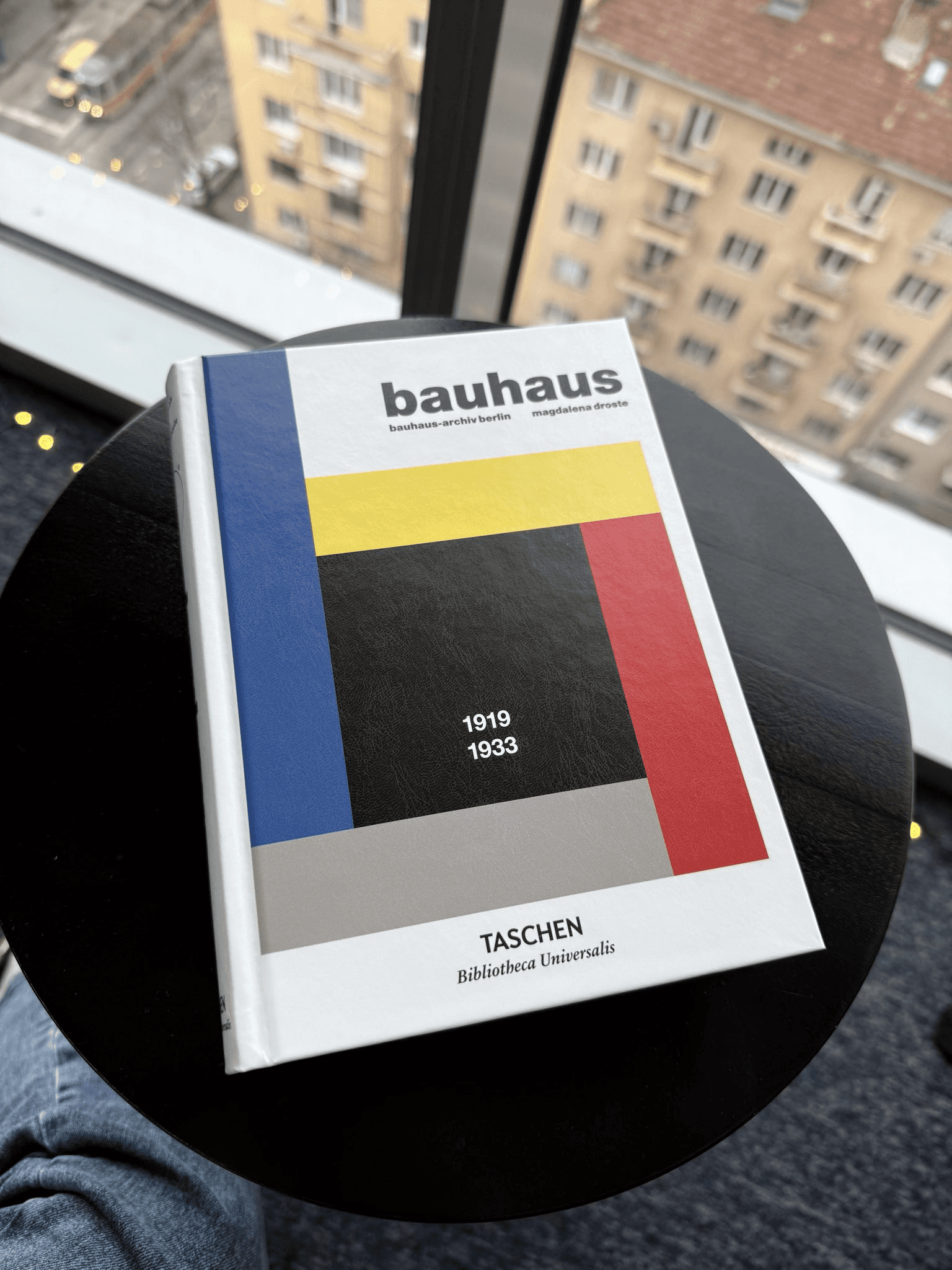
The Taschen Bauhaus book sitting on a shelf is a reminder that the most influential design school in history lasted just 14 years.
A digitalized 1972 Brazilian postage stamp by DIF Cardoso, featuring a bold Modernist illustration of an industrial iron ore loader at the Port of Tubarão.
A monochromatic Mexican postage stamp from the mid-20th century featuring a classic engraved portrait of the Aztec Emperor Cuauhtémoc in deep sepia tones.
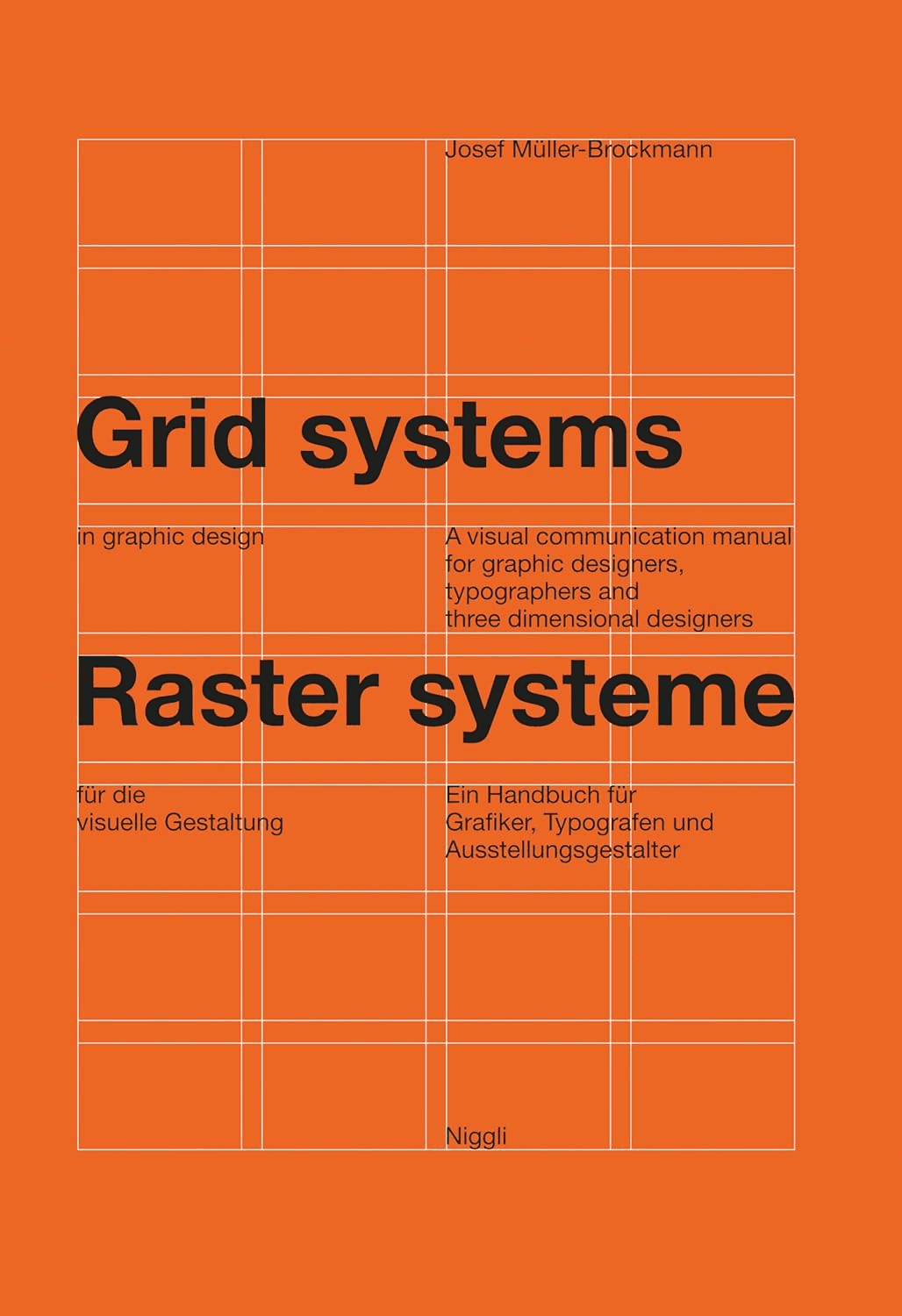
A definitive manual by Josef Müller-Brockmann that provides a comprehensive guide to grid-based design, explaining how to organize space, text, and images with mathematical precision and objective logic.
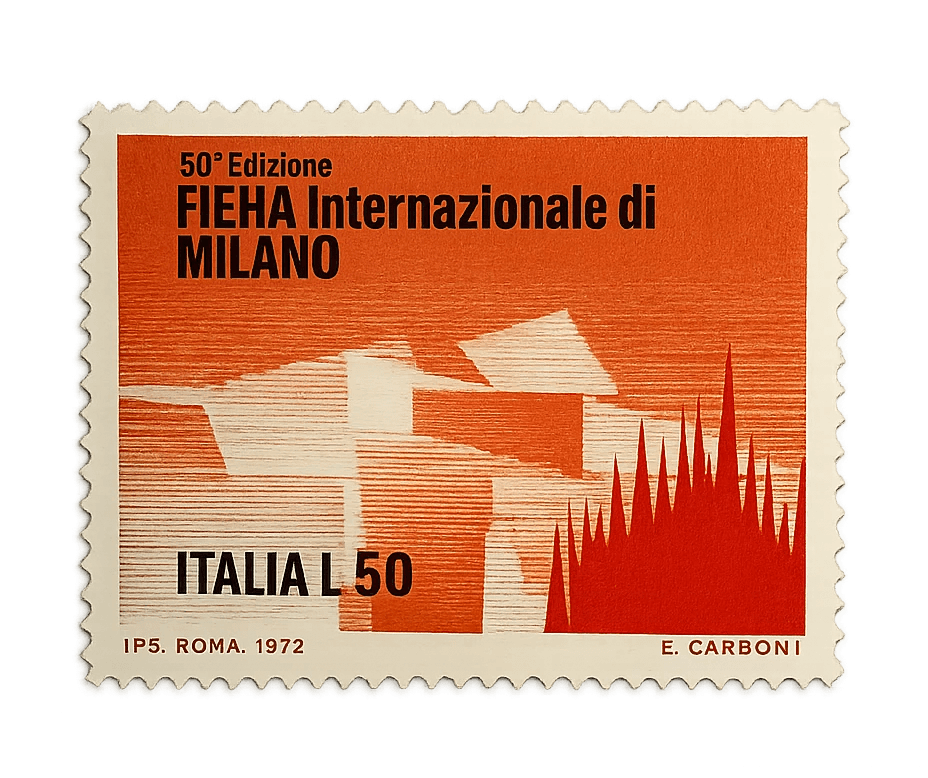
A bold, orange and red 1972 Italian postage stamp designed by Ercole Carboni, featuring abstract architectural forms and clean modernist typography.
A detailed, monochromatic indigo stamp from Argentina featuring an industrial refinery scene framed by a large gear wheel.
An AI-generated graphic featuring a large, lime-green serif letter "B" with a dark, textured drop shadow. Vibrant pink, yellow, and orange flowers are layered both behind and through the apertures of the letter against a deep teal background.
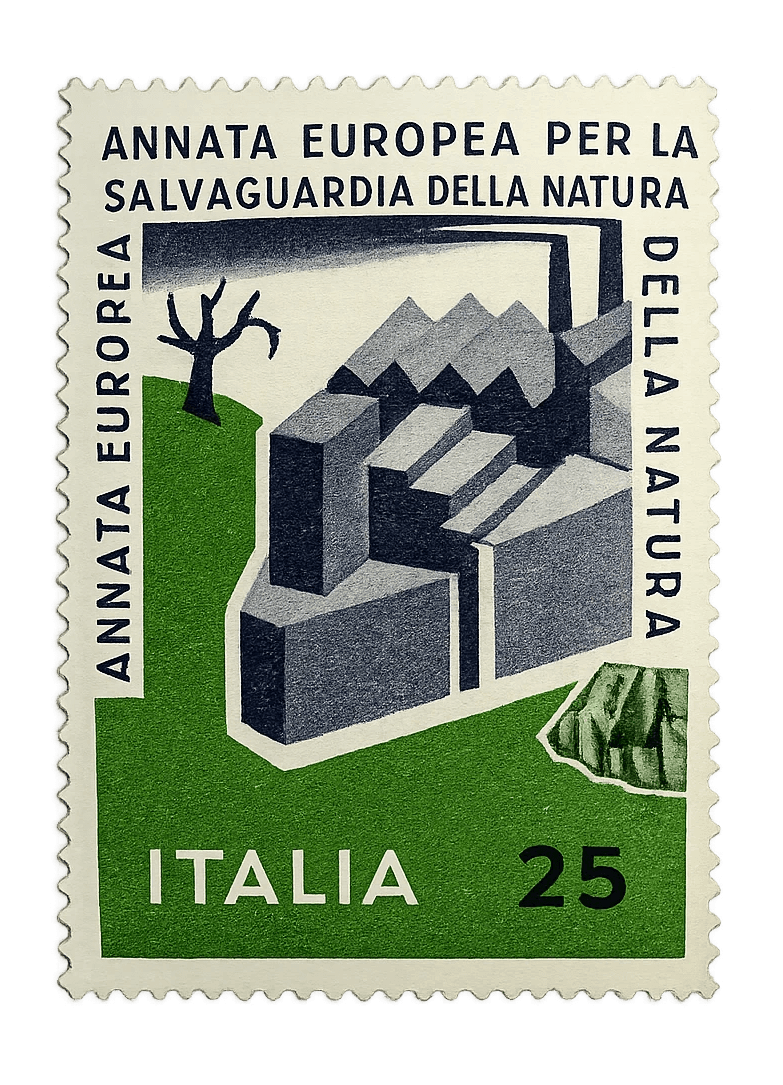
A graphic 1970 Italian postage stamp featuring a high-contrast illustration of a factory encroaching on nature, issued for European Nature Conservation Year.
West Germany 90 Pfennig postage stamp depicting Königsberg in East Prussia, engraved design from the 1960s German Federal Republic postal series
An AI-generated visual of a minimalist, egg-shaped robotic dog. It features a creamy, matte-textured body, high-gloss orange ears, and a circular chest emblem with a red "C" logo against a muted teal background.